


How to make a precise punch cutting positioning?
27 February 2025
Which kind of materials can be cut with Boehm gasket cutting tools?
22 January 2026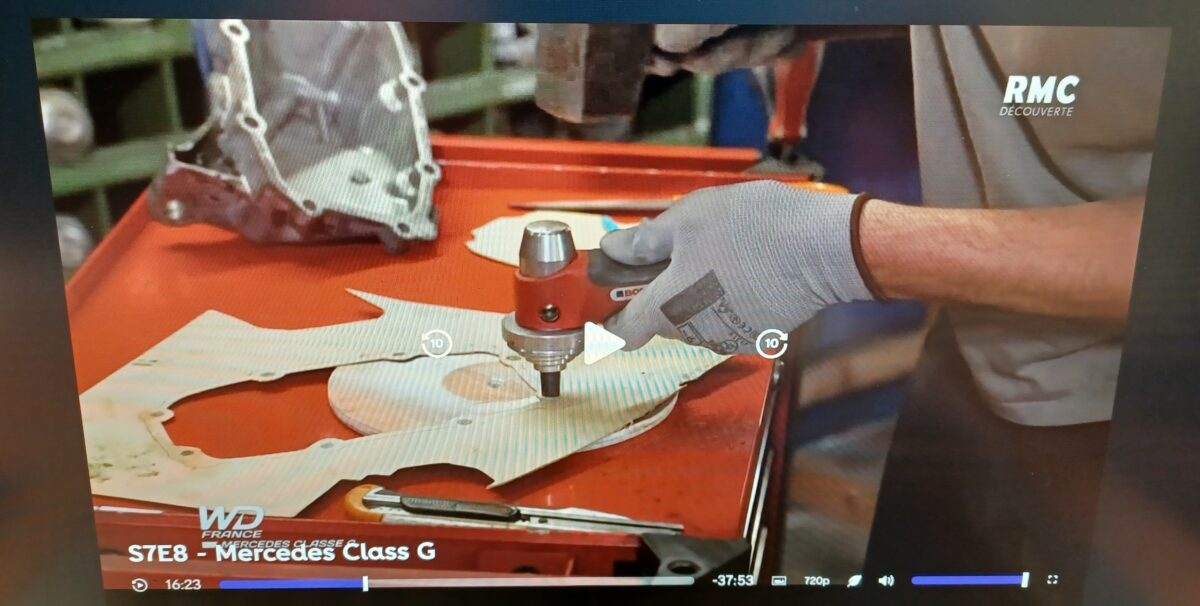
How to Make a crankcase gasket? The Technique Featured on Wheeler Dealers France
When restoring a classic vehicle or repairing an engine, finding replacement gaskets can sometimes be a challenge. Original parts may no longer be available, delivery times can be excessive, or the vehicle may simply be too old for replacement components to exist. In these situations, making a custom paper gasket is often the fastest and most effective solution.
This technique was recently featured in an episode of Wheeler Dealers France on RMC Découverte, where mechanics Jerry and Aurélien restored a Mercedes G-Class.
They used BOEHM hollow punches to create a replacement gasket directly in the workshop.
Why Make Your Own crankcase gasket?
Crankcase gaskets play a critical role in maintaining proper sealing between engine, transmission and mechanical components. Sometimes, mechanical stress, temperature fluctuations and fluids can cause it to deteriorate.
Over time, there are several possible scenarios:
- The original gasket is damaged
- The manufacturer’s part number is no longer available
- Lead times are too long
- The vehicle is too old to find spare parts easily.
Having a custom-made crankcase gasket made therefore allows work to continue without the vehicle being out of action for several weeks.
What materials should you use to make a paper gasket?
Most flat gaskets can be made from sheets specifically designed for mechanical sealing.
The most commonly used materials are:
- Gasket paper
- Compressed fiber sheets
- Cork gasket material
- Rubber gasket material
The choice depends on operating temperature, fluid compatibility and pressure requirements.
Essential Tools for Making a Crankcase Gasket
To achieve professional results, using the proper tools is essential.
Recommended tools include:
- Gasket material sheet
- A cutter or scissors
- A hammer
- a set of Boehm gasket cutters
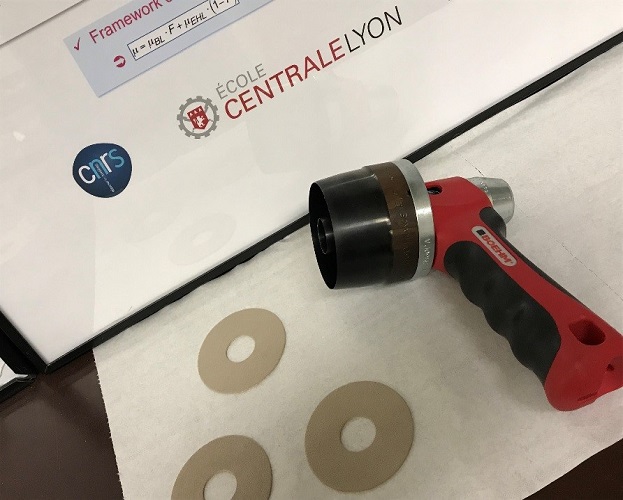
Among these tools, hollow punches are particularly important because they allow clean, perfectly round holes to be cut for mounting bolts and fasteners.
Accurate holes ensure proper alignment and help maintain reliable sealing performance.
How to Make a Crankcase Gasket Step by Step
1. Trace the Original Gasket
Whenever possible, use the original gasket as a template.
Place it on the new gasket material and carefully trace the outer profile as well as the bolt-hole locations.
Accurate marking at this stage will ensure a perfect fit during installation.
2. Punch the Bolt Holes
This is where precision becomes critical.
In Wheeler Dealers France, Aurélien uses BOEHM hollow punches to create clean and accurate mounting holes.
By selecting the appropriate punch diameter, each hole is cut quickly and cleanly with a few hammer strikes.The result is a professional-quality finish that would be difficult to achieve with standard cutting tools.
3. Cut the Internal Openings
The inner sections of the gasket can then be cut using a utility knife or precision blade.
Careful cutting ensures the gasket matches the original design and functions correctly once installed.
4. Cut the Outer Profile
Finally, trim the outside edge of the gasket following the marked outline..
The custom gasket is now ready for installation.
Why Hollow Punches Are Essential for Automotive Restoration
Professional restorers rely on hollow punches for a wide variety of applications.
They are commonly used to:
- Make engine gaskets,
- Reproduce carburetor gaskets,
- Cut pump gaskets
- Create custom gaskets,
- Repair vintage mechanical systems
Because they produce clean and consistent cuts, hollow punches help improve both appearance and functionality.
BOEHM Hollow Punches: Designed for Precision
For over a century, BOEHM has been manufacturing precision cutting tools in France.
The BOEHM system featured in Wheeler Dealers France includes:
- Patented ergonomic handle
- Increased hand safety during striking
- Reduced vibration transmission
- Quick-change punch system
- Wide range of punch diameters
This modular design allows users to quickly adapt to virtually any gasket-making requirement.
A Valuable Tool for Classic Car Restoration
Classic car restorers frequently face the challenge of replacing parts that are no longer manufactured.
Custom gasket production offers an effective solution that helps keep restoration projects moving forward.
Having a precise cutting system allows you to work more independently and carry on with your projects even when the original parts are no longer available.
It is this ability to quickly produce bespoke gaskets that explains why cutting cutters are now widely used by automotive restorers, specialist garages and classic car enthusiasts.
Professional Gasket Making Solutions
Whether working on a vintage Mercedes, classic American car, antique tractor or industrial engine, the ability to manufacture replacement gaskets on demand is a valuable skill.
With more than 140 available diameters, professionals can create precise gasket solutions for a wide variety of applications.
Watch the Wheeler Dealers France Episode
See how BOEHM hollow punches were used to manufacture a replacement gasket during the restoration of a Mercedes G-Class and discover why professional restorers trust precision cutting tools for their most demanding projects.
For more information, please visit our page on car restoration.
To see the video of the show: